
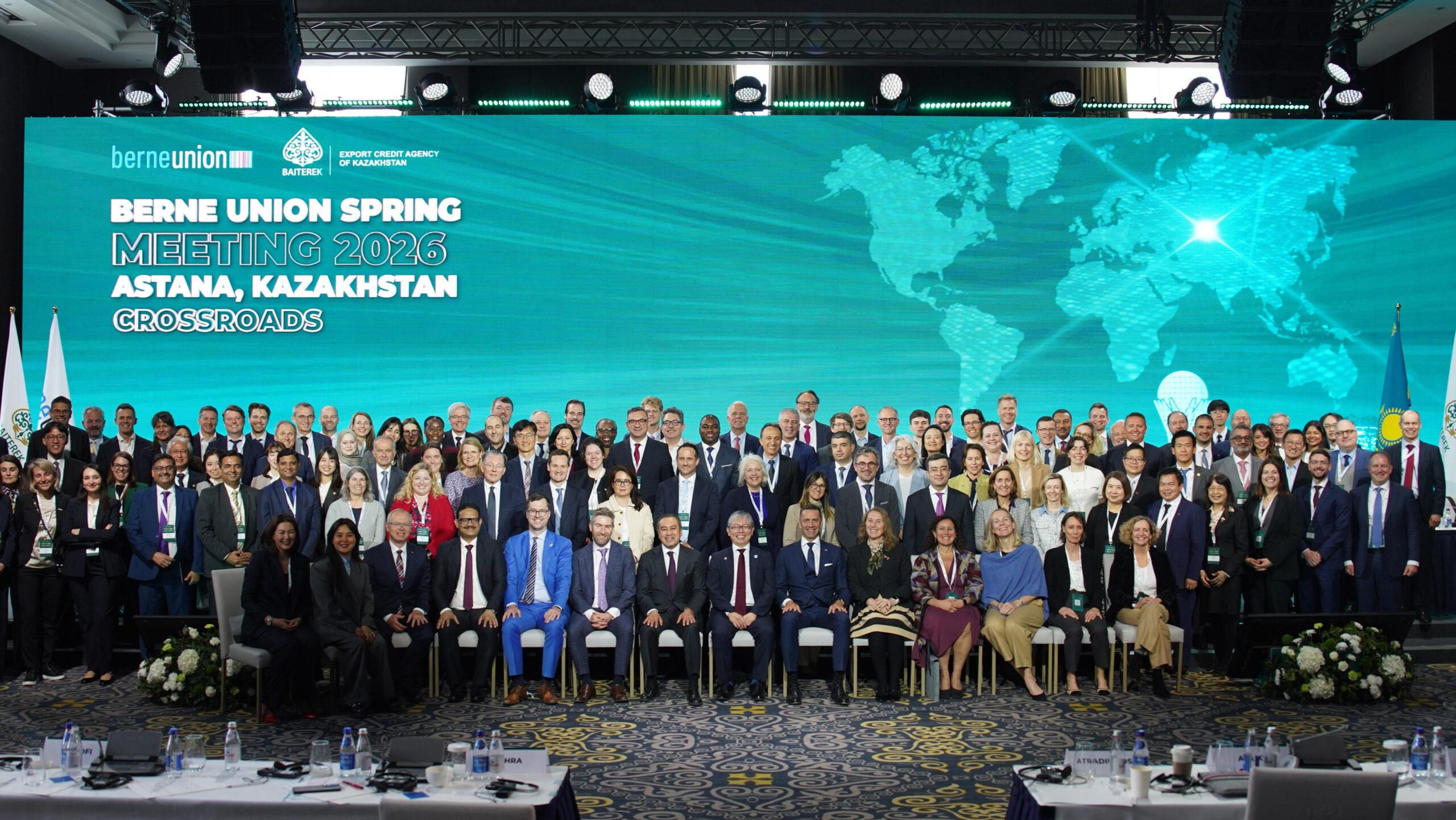
Rising geopolitical tensions, pressures on the security of supply chains and new investments in energy are changing the way countries promote exports and international trade. Eximbank representatives are also discussing these issues at the Berne Union Spring Meeting, which is taking place this week in Astana, Kazakhstan, with more than 200 delegates representing 90 export finance and insurance organisations from around the world .
According to the latest data from the Berne Union, its members will have supported a record $3.7 trillion in international trade in 2025, representing a 12% year-on-year growth. Risk management and mitigation instruments have seen significant growth in demand, particularly in the areas of export finance, energy, infrastructure and critical raw materials. Export credit agencies accounted for USD 1.7 trillion of this volume. The medium- and long-term financing segment for large projects is also growing significantly, with strategic mega-projects in nuclear power, defence and wind farms being the biggest drivers. There is also a significant shift away from tied exports towards support for transactions of strategic interest to states, whose exposure has doubled since 2019 (up 33% year-on-year). In parallel, support for domestic supply chains is growing rapidly, reaching a volume of EUR 80 billion. USD.
Discussions at the event reflect the changing global economic environment, in which the importance of economic security, market diversification and effective risk management is growing. These changes are also increasingly affecting Slovak exporters, especially companies operating in industry, energy or supply chains linked to European and non-European markets.
“For many years, global trade was built primarily on efficiency and low costs. Today, however, companies and countries are much more concerned about the security of supply chains, the availability of strategic raw materials and geopolitical risks. For Slovak exporters, this means the need for greater market diversification and better risk management. Naturally, this also changes the role of export credit agencies – the importance of export financing and insurance instruments is growing, which help companies to remain competitive even in times of increased uncertainty and volatility of international trade,” said Rastislav Podhorec, CEO of Eximbanka.
The Spring Meeting programme also includes discussions on the ongoing integration of ESG principles (environmental criteria, social standards, sustainability criteria, business ethics, control mechanisms, etc.) into the activities of export credit agencies and insurers, the use of digital technologies and artificial intelligence in financing and insurance processes, etc. The Berne Union brings together 88 members, including state export credit agencies, multilateral financial institutions and private insurers, which collectively support approximately 13% of global cross-border trade.