Slovak exporters will gain up to €100 million in favourablefinancing under a new agreement between the European Investment Bank (EIB) and the country’s export-credit agency, Eximbanka. The EIB is providing a €50 million loan to Eximbanka, which will match the sum and channel the total to Slovak businesses seeking to expand internationally.
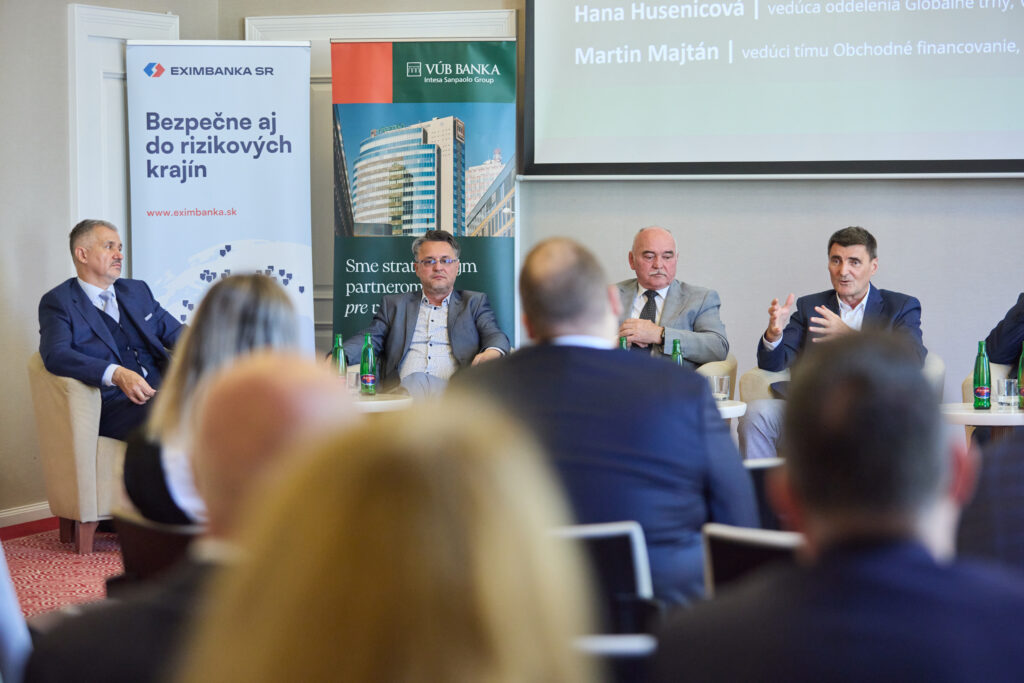
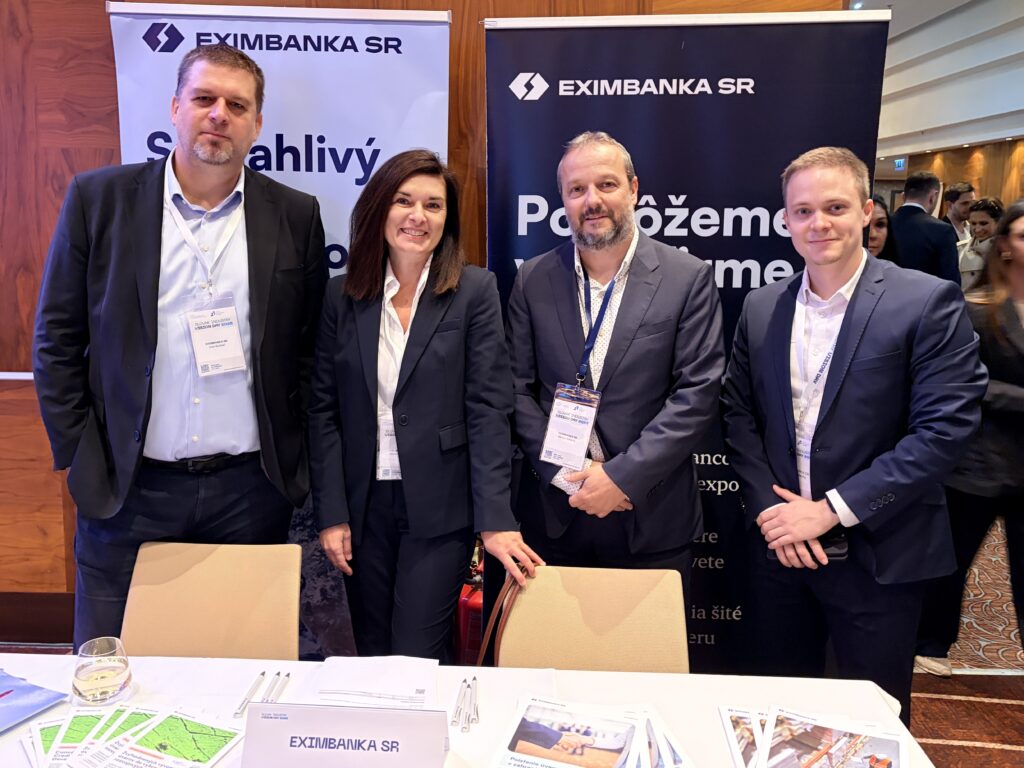
Eximbanka participated as one of the partners in the fifth annual Slovak Industry Vision Day 2026 event, which took place on October 27 in Bratislava. The business forum provided a platform for discussion on the competitiveness of Slovak industry, innovation, and new business opportunities. Key topics on the agenda included the internationalization of Slovak companies, the development of export potential, and expansion into foreign markets.
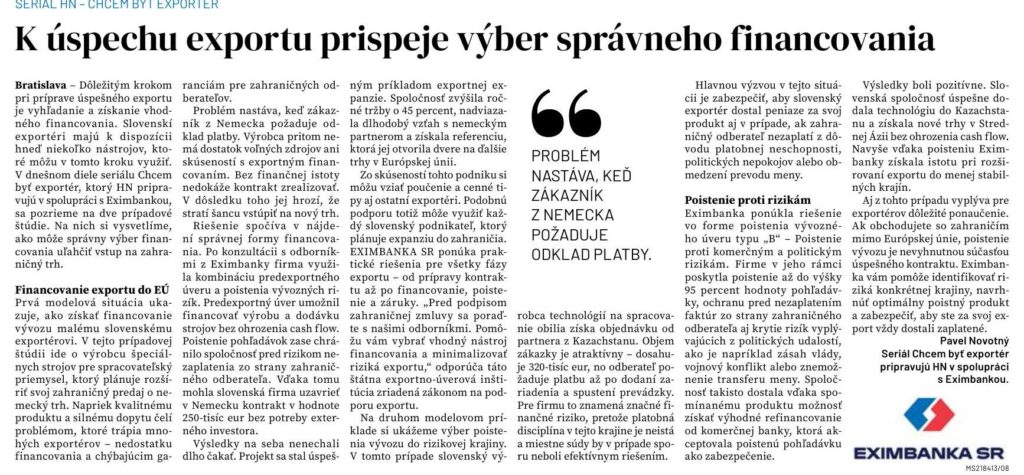
An important step in preparing for a successful export is finding and securing appropriate financing. Slovak exporters have several tools at their disposal that they can use in this step. In today’s installment of the series “I Want to Be an Exporter,” produced by HN in collaboration with Eximbanka, we’ll look at two case studies. Through them, we’ll explain how choosing the right financing can make it easier to enter a foreign market.
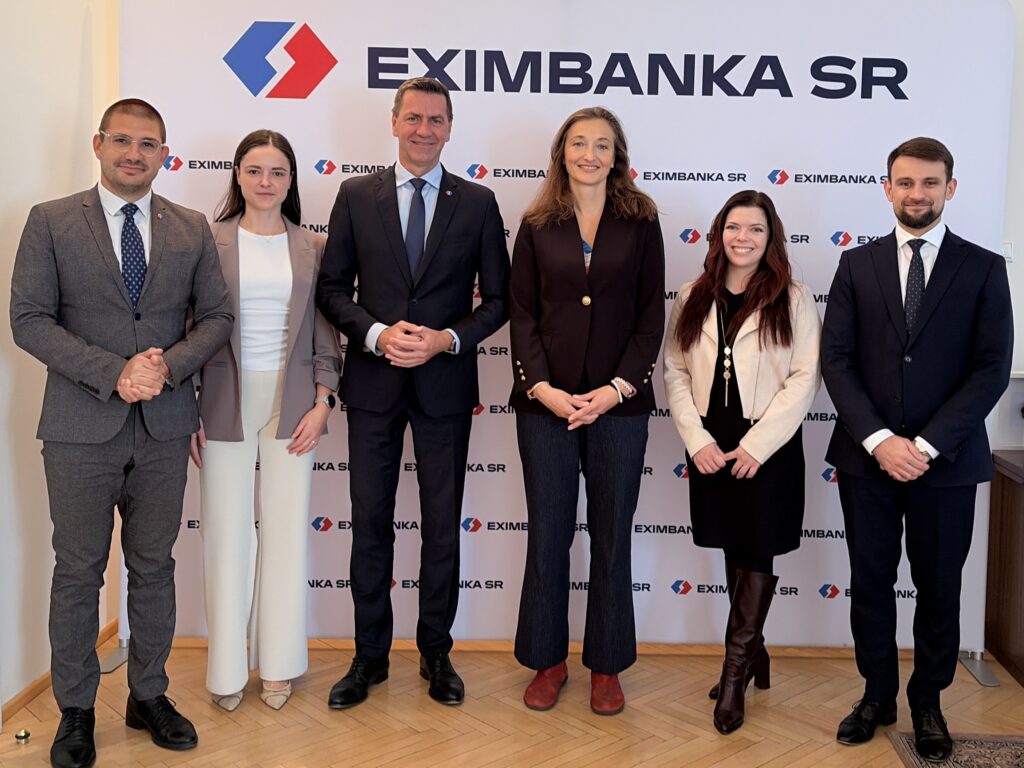
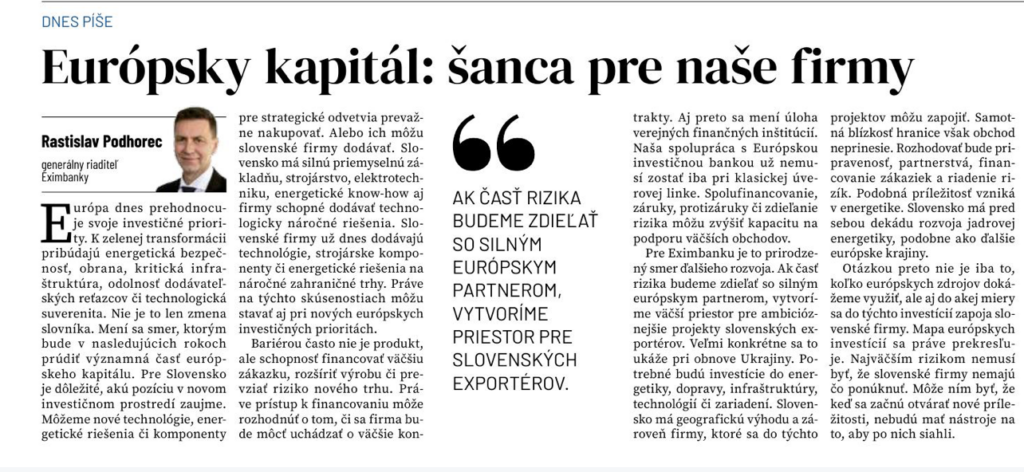
Progress in the preparation and implementation of investment projects in Ukraine, cooperation in utilizing European financial instruments, and other opportunities to support the country’s recovery were the main topics of today’s meeting between Eximbank representatives and a delegation from the European Commission.
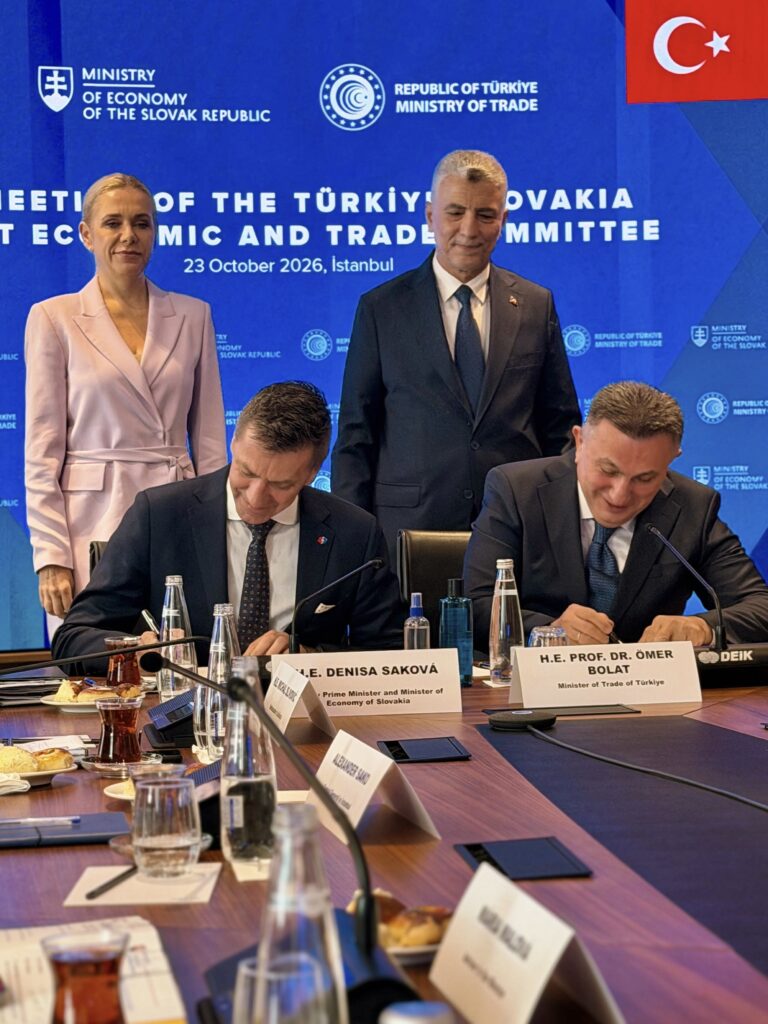
Promoting mutual trade, strengthening institutional ties, and exploring new forms of cooperation in third markets were the main topics of the first meeting of the Slovak-Turkish JETCO Commission, which
took place in Istanbul on October 23, 2026. Eximbanka was represented at the meeting by Rastislav Podhorec, its CEO and Chairman of the Board, and Matúš Šársky, Director of International Relations.
Tomark, a family-owned company based in Prešov, is one of Slovakia’s leading manufacturers of steel structures and components for trucks and trailers. In addition to traditional engineering production, it has also made a name for itself in the development and manufacture of its own sport aircraft, which it exports to several global markets.
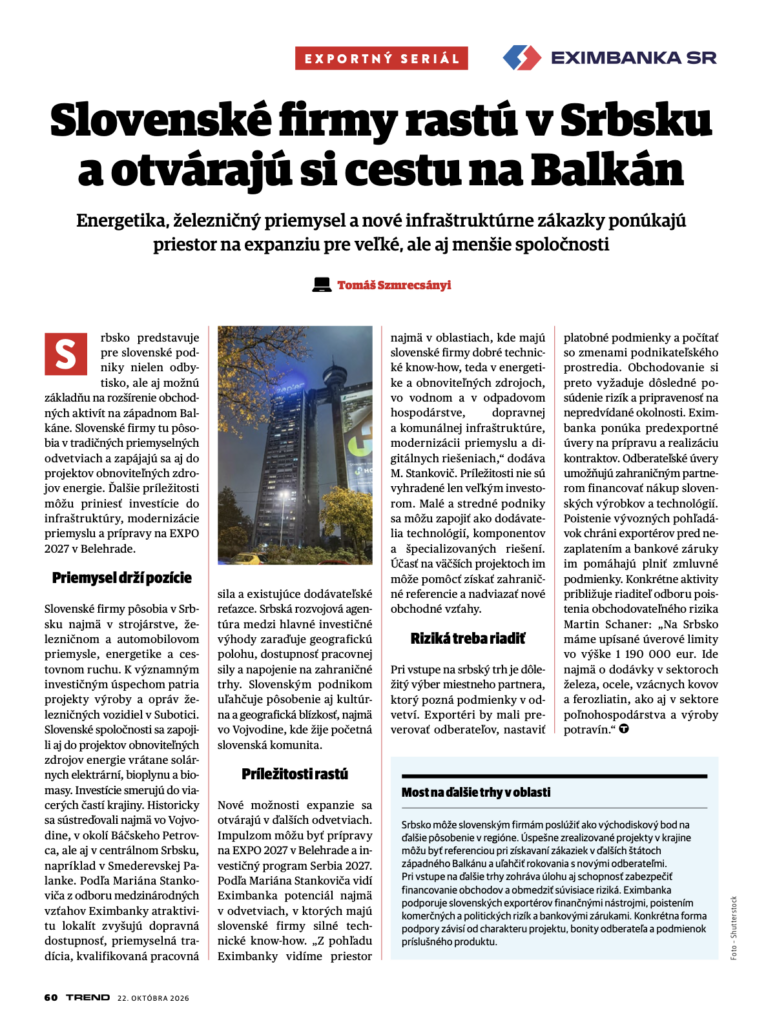
Serbia represents not only a market for Slovak companies but also a potential base for expanding their business activities in the Western Balkans. Slovak companies operate here in traditional industrial sectors and are also involved in renewable energy projects. Further opportunities may arise from investments in infrastructure, industrial modernization, and preparations for EXPO 2027 in Belgrade.