
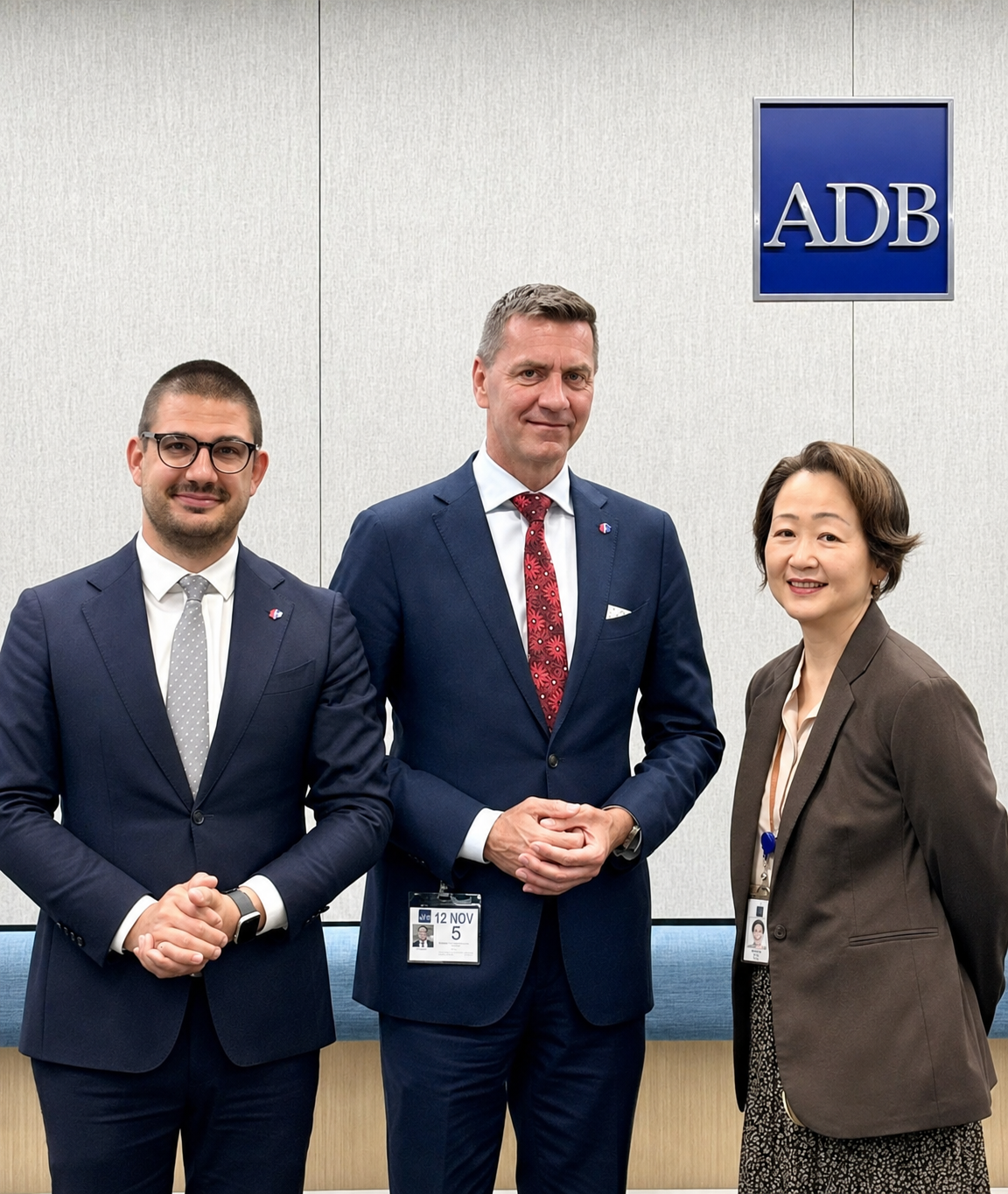
Representatives of Eximbanka (Rastislav Podhorec, Matúš Šársky) today, November 12, held an initial round of talks in Manila with the leadershipof the Asian Development Bank (ADB), represented by F. Cleo Kawawaki, Director General for Strategic Resource Mobilization. This was the first official contact between the two institutions, during which they discussed their respective activities, mandates, and product portfolios with the aim of identifying relevant areas for future cooperation.
The alignment of the dominant player’s development interests in the Indo-Pacific market with Eximbank’s tools for mobilizing commercial capital and supporting exports represents a significant opportunity for Slovak entrepreneurs.
The ADB is the largest multilateral development institution in Asia and one of the largest in the world—in 2025, its total commitments reached nearly $30 billion. It brings together 69 members, primarily from the Asian region, and its projects focus mainly on infrastructure, water management, and energy.
Negotiations with the Asian Development Bank (ADB) are viewed by EXIMBANKA SR as an important step toward identifying specific opportunities for the direct or indirect participation of Slovak companies and subcontractors in ADB international tenders in its partner countries. Exceptional potential is opening up particularly in the Central and Southeast Asian region, where Slovak companies are already successfully operating, especially in the water management and infrastructure sectors.
In implementing its projects, the ADB actively utilizes co-financing, guarantee mechanisms, and close partnerships with commercial banks, export credit agencies, and other development finance institutions.
Eximbanka will continue to work toward strengthening more structured cooperation with this institution. In the meantime, it offers Slovak exporters concrete support in bidding for foreign contracts, for example, in the form of bank guarantees (BZ) prior to participating in a tender or through the PEX product (a loan to finance the pre-export stage) to cover production costs.